Posts

Showing posts with the label eval

#5 Splunk sub(Commands) [sendemail, dedup, eval, concatenate, new_field]

SENDEMAIL:  This command helps you to send an email straight away from the search head itself. you just need to pass couple of values to it. For instance to whom you want to send the email, if you want to keep anyone in cc/bcc, change the subject line (by default its "Splunk Results"), sendpdf(true or false) i.e. the results, set the priority of the email, give a message i.e. the body(if required). Example: | sendemail to ="XYZ@gmail.com" subject ="Test Search Results" sendpdf =true priority =highest message ="Please find attached latest search result" sendresults =true DEDUP:  This command helps de-duplicate the results based upon specified fields, keeping the most recent match. Example: | dedup txn-id EVAL:  This command helps to evaluate new or existing fields and their values. There are multiple different functions available for eval command. Lets say you want to add a new field, for doing so you can use something like given belo...
#3 Splunk sub(Commands) [eval, round, trim, stats, ceil, exact, floor, tostring]

Image
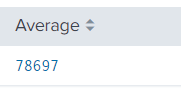
ROUND: Eval with round takes one or two numeric arguments, returning 'first value' rounded to the amount of decimal places specified in 'second value'.  By default it will remove all the decimals. Example: index=idx_messages sourcetype=linux_logs | eval new_rt= trim ( replace (response_time, "ms.", "")) | stats avg (new_rt) as Average | eval Average= round (Average) Remove all the decimal values. Example: | eval Average= round (Average,3) Rounded the value up-to 3 decimal places. Example: | eval Average= ceil (Average) Round the value up-to the next highest integer. Example: | eval Average= exact (Average) Give the output with maximum possible number of decimal values. Example: | eval Average= floor (Average) Round the value down to the nearest whole integer. Apart from this, there are other functions as well which are used by eval command, for instance pi (), sqrt () etc. TOSTRING: Hel...

#2 Splunk sub(Commands) [eval, trim, chart, showperc, stats, avg]

Image
TRIM: Basically it helps you to create more meaning full data from existing data i.e. it helps you to remove noise from the results. Example: index=idx_messages sourcetype=linux_logs | eval new_rt= trim (replace( response_time , "ms.", "")) In above example, response_time is an existing field which consists of some unwanted data like "ms." which we don't want. So, by using eval and trim we can remove that unwanted data. If you will notice, above search will create a new field called new_rt which contains our intended results i.e. without "ms." CHART: It basically results your finished data in a table format, further that data can be used to visualize via different mechanism. Example: index=idx_messages sourcetype=linux_logs | chart count by date client useother=f Honestly the example is not so good but I believe, you are able to reach to the crux of it, i.e. it will show you which client on which date made how ma...